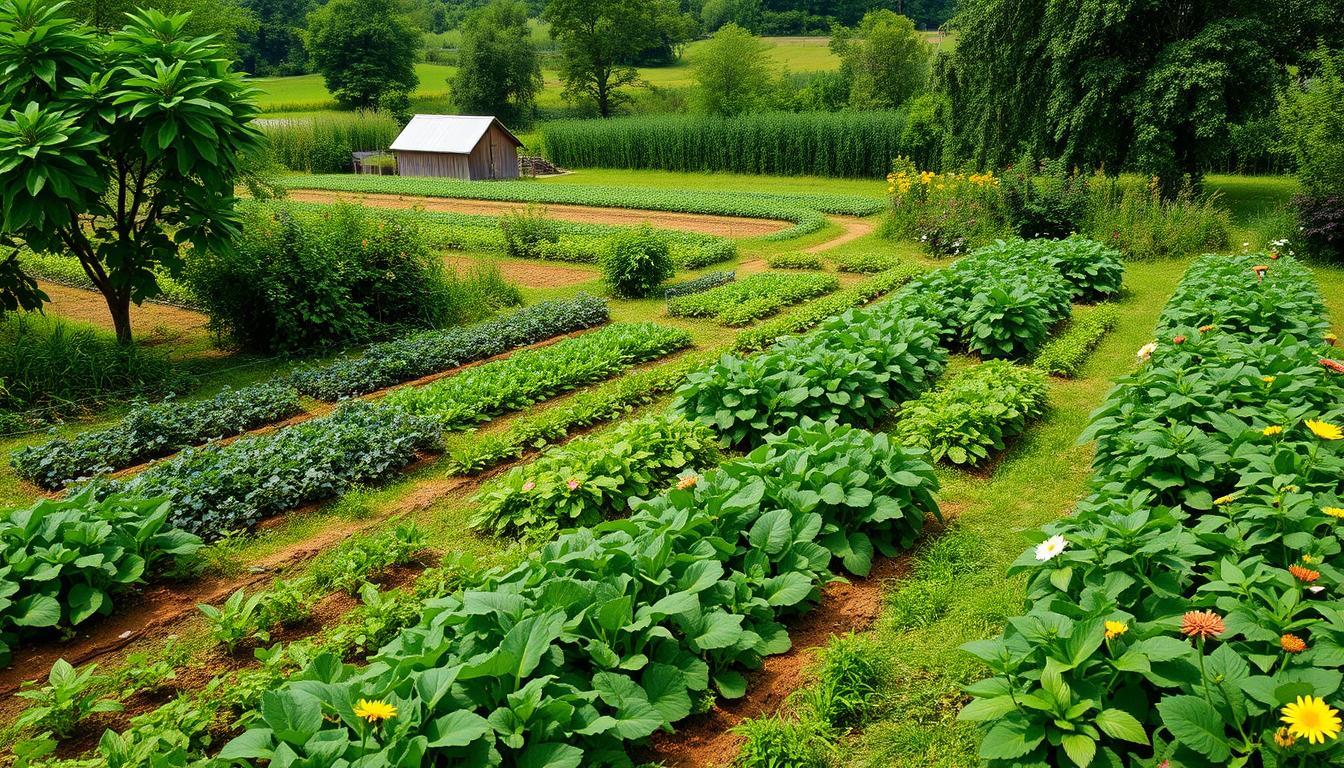
Re-generative organic farming is a way to farm that keeps resources good and makes them better. It’s key for sustainable agriculture. Our planet needs practices that care for soil, biodiversity, and ecosystems. This farming method helps solve environmental problems, fights climate change, and ensures healthy food for the future.
Experts say regenerative farming cuts down soil erosion by 10 to 100 times less than industrial farming. By choosing re-generative organic farming, we can make our planet better.
We must focus on re-generative organic farming and sustainable agriculture. These practices improve soil, biodiversity, and ecosystems. This way, we can have a healthier food system and a sustainable future for all.
Understanding Re-generative Organic Farming
Re-generative agriculture is a new way of farming that focuses on fixing ecosystems and making soil better. It’s different from old farming methods because it cares more about the environment, soil, and different species. This approach helps farms become stronger against nature’s challenges.
Farmers using regenerative methods use fewer chemicals and make their soil healthier. This method is not just about not harming the environment. It’s about making ecosystems better and keeping nature in balance. Organic farming, which doesn’t use synthetic chemicals, is a big part of re-generative organic farming. It helps improve soil health naturally.
Defining the Re-generative Approach
Regenerative farming is based on re-generative organic farming but aims to hold more carbon and make soil better. It uses methods like not tilling the soil much, planting cover crops to stop erosion, and avoiding chemicals that harm life and pollute water. These steps help keep the environment safe.
Core Principles and Practices
Re-generative organic farming has some key ideas and actions:
- Planting different crops to add nutrients and support life
- Creating compost on the farm to make soil better
- Using water wisely to save it and use it well
- Not tilling the soil much to keep it intact
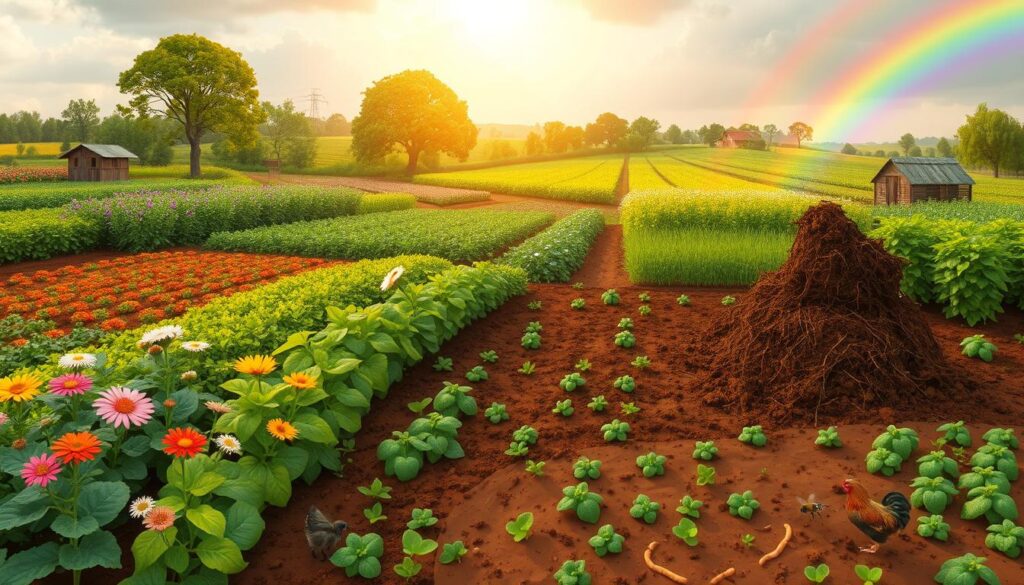
By following these steps, farmers can make their farms more sustainable and strong. This helps lessen the harm farming can do to the environment. It also makes food healthier and more sustainable for everyone.
| Practice | Benefits |
|---|---|
| Crop diversification | Enhances nutrients and promotes biodiversity |
| On-site composting | Improves soil health and reduces waste |
| Water conservation systems | Reduces waste and promotes efficient use of resources |
The Environmental Impact of Traditional Agriculture
Traditional agriculture harms the environment in many ways. It causes soil erosion, pollutes water, and reduces biodiversity. The use of synthetic fertilizers and pesticides leads to soil degradation. This makes it hard to grow crops.
Some major environmental issues with traditional farming are:
- Soil erosion and degradation
- Water pollution from nutrient runoff and pesticides
- Loss of biodiversity due to monoculture farming practices
The IPCC says 23% of global greenhouse gas emissions come from agriculture. This shows we need better farming methods. Re-generative organic farming focuses on soil health and biodiversity.
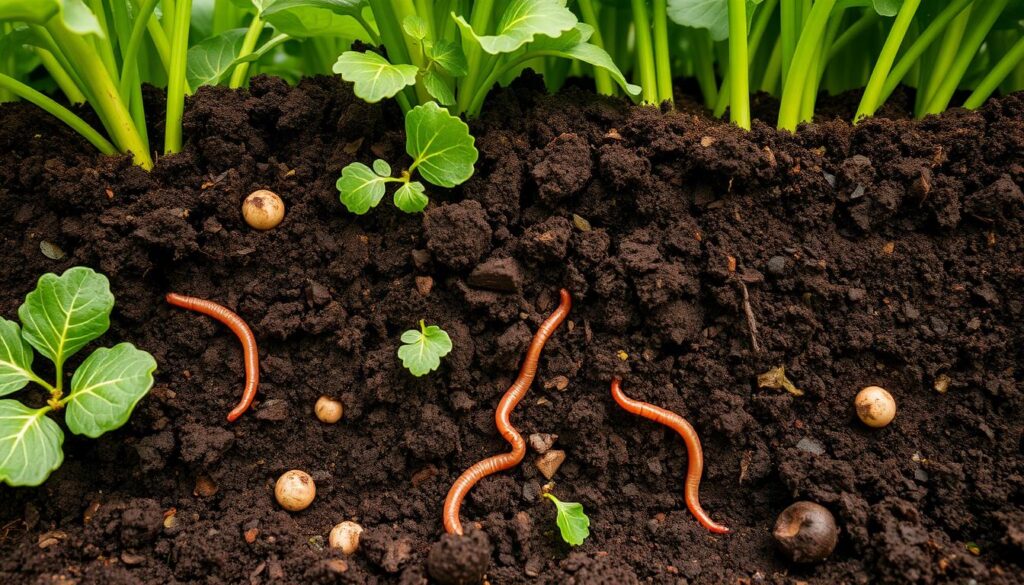
Re-generative organic farming reduces environmental harm while boosting crop quality. It also helps to lock carbon in the soil. This lowers greenhouse gas emissions in the atmosphere.
Benefits of Re-generative Organic Farming
Re-generative organic farming brings many benefits. It improves soil health and boosts biodiversity. It also helps with ecosystem services and fights climate change. By using regenerative methods, farmers make food systems stronger and the environment healthier.
Soil Health and Carbon Sequestration
Regenerative farming uses methods like crop rotation and no-till farming. These practices make soil richer and more diverse. They also help the soil hold more carbon, which lowers CO2 in the air.
Biodiversity Enhancement and Water Conservation Benefits
Regenerative organic farming supports wildlife and natural pest control. It also helps keep soil moist, cutting down on water use. This saves water and reduces the need for irrigation.
By focusing on ecosystem services and climate change, regenerative farming is good for the planet. It helps make our food system more sustainable.
Economic Viability for Farmers
Re-generative agriculture is good for the environment and also helps farmers financially. It cuts down on the need for synthetic inputs and boosts soil health. This leads to lower costs and higher profits for farmers.
There’s also a growing market for sustainable agriculture products. This gives farmers a chance to sell their products at higher prices. It helps them do better financially.
Some key economic benefits of rg-enerative agriculture are:
- Reduced costs for synthetic inputs
- Improved market access for sustainably produced products
- Increased profitability due to lower production costs
Studies show that regenerative agriculture improves soil health and fertility. It also helps water soak into the soil better. This means farmers can grow more crops and lose less soil to erosion.
This leads to more money for farmers. It makes sustainable agriculture a smart choice for those wanting to be kind to the environment and their wallets.
| Regenerative Agriculture Practice | Economic Benefit |
|---|---|
| No-till practices | Reduced production costs |
| Crop rotation diversity | Increased crop yields and profitability |
| Soil health improvements | Increased fertility and water-holding capacity, reducing soil erosion and degradation |
Implementing Regenerative Practices in Modern Agriculture
Regenerative agriculture focuses on improving soil health and biodiversity. It aims to reduce farming’s environmental impact. Organic farming is a big part of this, avoiding synthetic fertilizers and pesticides.
Key practices include crop rotation, composting, and using livestock. These methods enhance soil structure and water retention. For instance, cover cropping helps recycle nutrients and fix nitrogen, reducing the need for synthetic fertilizers.
Crop Rotation Strategies
Crop rotation is vital in regenerative agriculture. It breaks disease and pest cycles and boosts soil fertility. Legumes and corn are often rotated to fix and use nitrogen.
Composting and Natural Fertilizers
Composting transforms organic materials into nutrient-rich soil. Natural fertilizers like manure and green sand also support soil health. They help reduce synthetic fertilizer use.
Integration of Livestock
Adding livestock to regenerative agriculture enhances soil health and biodiversity. Grazing improves soil structure and water retention. It also boosts soil microbial diversity.
Regenerative agriculture offers many benefits:
- Improved soil health and fertility
- Increased biodiversity and ecosystem services
- Reduced environmental impact of farming
- Improved nutritional quality of food
- More resilient food systems
| Practice | Benefits |
|---|---|
| Crop Rotation | Breaks disease and pest cycles, improves soil fertility |
| Composting | Transforms biological materials into organic matter, improves soil fertility and structure |
| Integration of Livestock | Promotes soil health, biodiversity, and ecosystem services |
Success Stories and Case Studies
Regenerative agriculture has shown great success in many places. It’s used on small farms and big operations. This approach helps the environment and makes farmers’ lives better. For example, Green Meadows Farm uses less synthetic stuff and grows more crops because of it.
At Sunflower Fields Cooperative, they’ve seen more life in their fields and better crops. They’ve also found new customers who care about the planet. This shows how working together can make a big difference.
These stories prove that regenerative farming is good for the planet and for farmers. It makes the soil better, brings in more life, and grows more food. It’s a step towards a greener food system.
Here are some examples of regenerative farming in action:
- Paradise Valley Winery has better grapes and more vines thanks to new farming ways.
- Riverside Ranch has kept more water and made pastures better with smart farming.
- The Athens Land Trust has saved 17,000 acres in Georgia. They’re working to solve housing and food problems.
Overcoming Transition Challenges
Switching to regenerative agriculture is tough. It means big changes in how you farm, your setup, and getting your products to market. But, with the right help, training, and perks, farmers can beat these hurdles. They can enjoy better ecosystem services and environmental sustainability.
Farmers face many obstacles when moving to regenerative farming. They might not have access to organic stuff, know-how, or money. To tackle these, farmers can get help from educational programs, group efforts, and financial aid. For instance, 65% of farmers struggle to get organic seeds and compost needed for regenerative farming.
Helping farmers is key to beating these challenges. This means giving them the tools and backing they need. Here’s what can help:
- Access to organic inputs, like seeds and compost
- Learning and training on regenerative farming
- Money help and bonuses for switching to regenerative farming
- Platforms where different groups work together for better rules and support
By giving farmers the right tools and support, we can help them face the hurdles of regenerative farming. This way, we encourage practices that boost ecosystem services and environmental sustainability.
| Challenge | Solution |
|---|---|
| Lack of access to organic inputs | Provide access to organic inputs, such as seeds and compost |
| Limited knowledge and skills | Offer education and training on regenerative agriculture practices |
| Financial constraints | Offer financial support and incentives for transitioning to regenerative agriculture |
Conclusion: Embracing the Future of Sustainable Agriculture
Re-generative organic farming is a beacon of hope for the future of agriculture. It focuses on soil health, biodiversity, and responsible resource use. This approach not only helps the environment but also supports farmers and ensures healthy food for future generations.
The world’s population is expected to hit 9.7 billion by 2050. This makes sustainable agriculture more crucial than ever. Regenerative organic farming offers a solution by improving soil, saving water, and fighting climate change. By adopting this method, we can build a food system that works with nature, is resilient, and can feed everyone.
